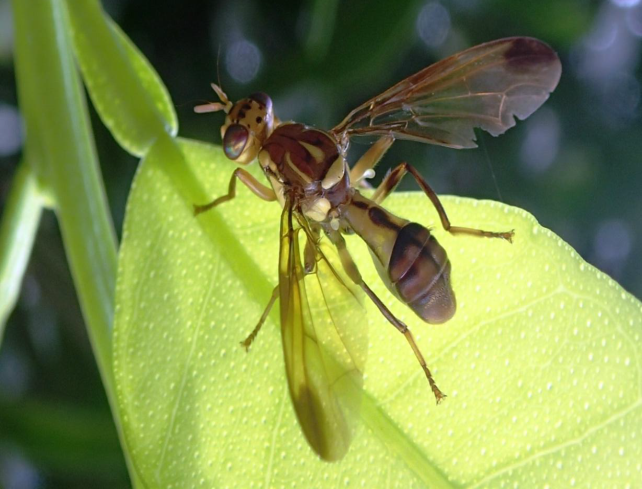
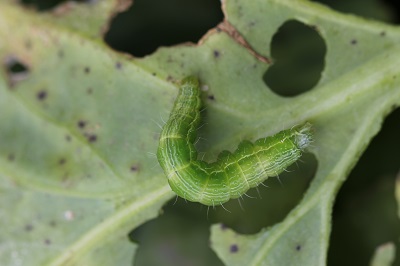
Flat spiny caterpillar

Agalope hyalina Crop: Apple Why is it a problem? Large numbers of larvae on young fruit can result in considerable losses through fruit drop. Market value can also be reduced through distortion of fruit shape caused by partial feeding on the apple. Insecticides are needed to manage severe outbreaks. Feeding …

Print Friendly, PDF & Email

Citrus shield bug

Rhynchocoris poseidon Crop: Citrus Why is it a problem? Feeding on the sap of young mandarins can cause a considerable early (“summer”) fruit drop, although compensatory development of the remaining fruit can lessen its economic importance. Damage can be severe, but management is generally not needed in most years and …

Print Friendly, PDF & Email

Citrus leaf miner

Phyllocnistis citrella Crop: Citrus Why is it a problem? The citrus leaf-miner is mainly a problem in young (seedling) trees, including in nurseries, where at high densities it retards growth and can result in secondary infections. Mature trees are better able to withstand the attack. Where and when is it …

Print Friendly, PDF & Email

Chinese fruit fly

Bactrocera minax Crop: Citrus Why is it a problem? The Chinese fruit fly is the most serious insect pest in citrus. Up to 70% of losses through late fruit drops have been reported. Where and when is it a problem? In eastern Bhutan, in higher orchards (over 1000 m altitude) and …

Print Friendly, PDF & Email

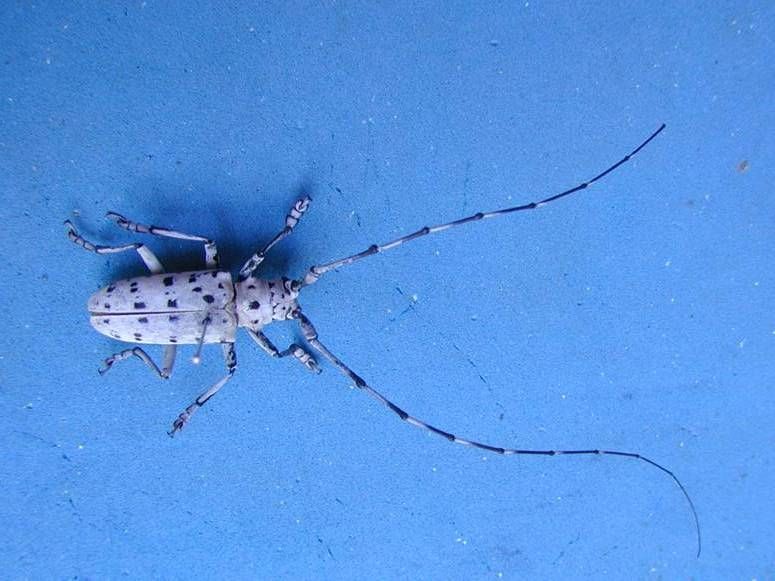
Citrus trunk borer

Anoplophora nr versteegi Crop: Citrus Why is it a problem? The Citrus trunk borer is the primary cause of tree decline in Bhutan. Most die-back affected trees are infested with trunk borer. It can cause tree decline, mostly by ring-barking younger trees. Pest populations are slow to build up and …

Print Friendly, PDF & Email

Harlequin bug

Eurydema spp. Crops: Cole crops, beans, spinach Why is it a problem? Harlequin bugs can be damaging during the seedling stage and early stage of the crops in Bhutan. The concentrated attack causes widespread withering of young leaves. However, it rarely causes economic losses. Where and when is it a …

Print Friendly, PDF & Email

Cabbage aphid

Brevicoryne brassicae Crops: Cole crops, also mustard and radish Why is it a problem? The wax, shed skins, mold, and honey dew associated with cabbage aphid colonies can spoil the appearance of Cole crops for market. This is primarily a problem for broccoli, where the heads can become unsaleable. Where …

Print Friendly, PDF & Email

Diamondback moth

Plutella xylostella Crop: Cole crops Why is it a problem? Diamondback moth (DBM) larvae feed on the foliage of Cole crops. Although larvae are small, outbreaks can destroy entire crops if not recognized and managed in time. Larvae can be evenly distributed across a field, so can cause significant losses …

Print Friendly, PDF & Email

Cabbage moth

Mamestra brassicae Crops: Cole crops Why is it a problem? Cabbage moth larvae are large and feed individually. They feed within cabbage heads, and even the presence of a few larvae within a head can completely spoil it for market. Once inside the cabbage, they can be difficult to find …

Print Friendly, PDF & Email

Cabbage white butterfly

Pieris brassicae Crops: Cole crops Why is it a problem? The cabbage white butterfly is probably the most important of several moth pests that feed on Cole crops in Bhutan. It is a conspicuous pest that can be managed through regular monitoring and physical control, although insecticides are often used. …

Print Friendly, PDF & Email