Cleorina leaf beetles

Cleorina spp. Crops: Apples, walnut Why is it a problem? Cleorina leaf beetles are not normally a serious problem in apples but can cause localized damage to developing apples and occasionally completely defoliate young trees. Where and when is it a problem? This beetle can be commonly found in all …

Print Friendly, PDF & Email

Apple fruit borer

Argyresthia spp. Crop: Apple Why is it a problem? Larvae burrow into developing apples, resulting in an early fruit drop. Dissection is generally needed to confirm that they are the cause of the early fruit drop. This is rarely done, so losses due to this insect are probably underreported. Where …

Print Friendly, PDF & Email

Flat spiny caterpillar

Agalope hyalina Crop: Apple Why is it a problem? Large numbers of larvae on young fruit can result in considerable losses through fruit drop. Market value can also be reduced through distortion of fruit shape caused by partial feeding on the apple. Insecticides are needed to manage severe outbreaks. Feeding …

Print Friendly, PDF & Email

Citrus shield bug

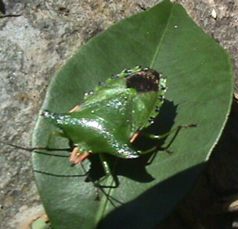
Rhynchocoris poseidon Crop: Citrus Why is it a problem? Feeding on the sap of young mandarins can cause a considerable early (“summer”) fruit drop, although compensatory development of the remaining fruit can lessen its economic importance. Damage can be severe, but management is generally not needed in most years and …

Print Friendly, PDF & Email

Citrus leaf miner

Phyllocnistis citrella Crop: Citrus Why is it a problem? The citrus leaf-miner is mainly a problem in young (seedling) trees, including in nurseries, where at high densities it retards growth and can result in secondary infections. Mature trees are better able to withstand the attack. Where and when is it …

Print Friendly, PDF & Email

Chinese fruit fly

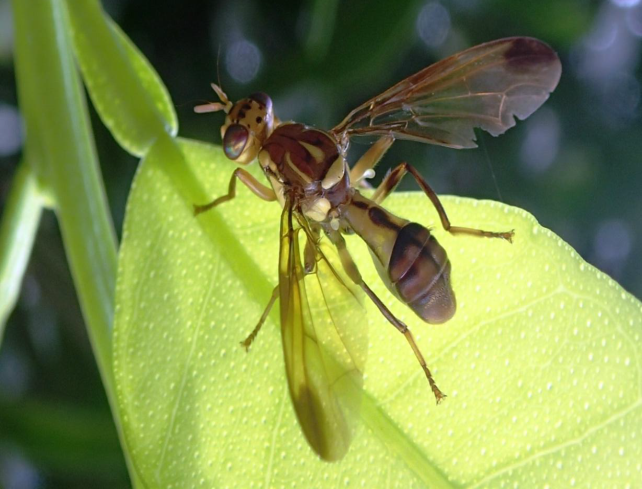
Bactrocera minax Crop: Citrus Why is it a problem? The Chinese fruit fly is the most serious insect pest in citrus. Up to 70% of losses through late fruit drops have been reported. Where and when is it a problem? In eastern Bhutan, in higher orchards (over 1000 m altitude) and …

Print Friendly, PDF & Email

Citrus trunk borer

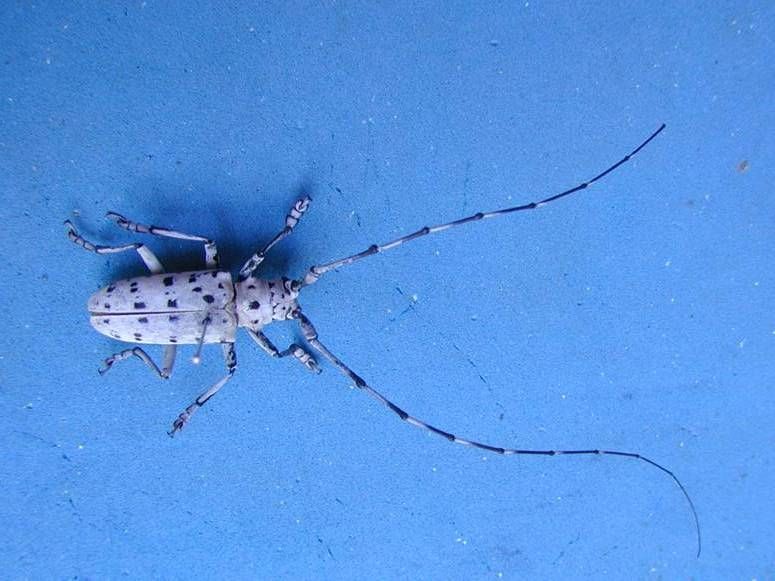
Anoplophora nr versteegi Crop: Citrus Why is it a problem? The Citrus trunk borer is the primary cause of tree decline in Bhutan. Most die-back affected trees are infested with trunk borer. It can cause tree decline, mostly by ring-barking younger trees. Pest populations are slow to build up and …

Print Friendly, PDF & Email

Huanglongbing (HLB)

Candidatus Liberibacter asiaticus Crop: Citrus Why is it problem? Huanglongbing (HLB), is one of the most devastating citrus diseases globally. There is no known cure for the disease. It probably entered Bhutan in the 1960s and has become the most serious threat to citrus production. Huanglongbing infection results in reduced …

Print Friendly, PDF & Email

Powdery mildew

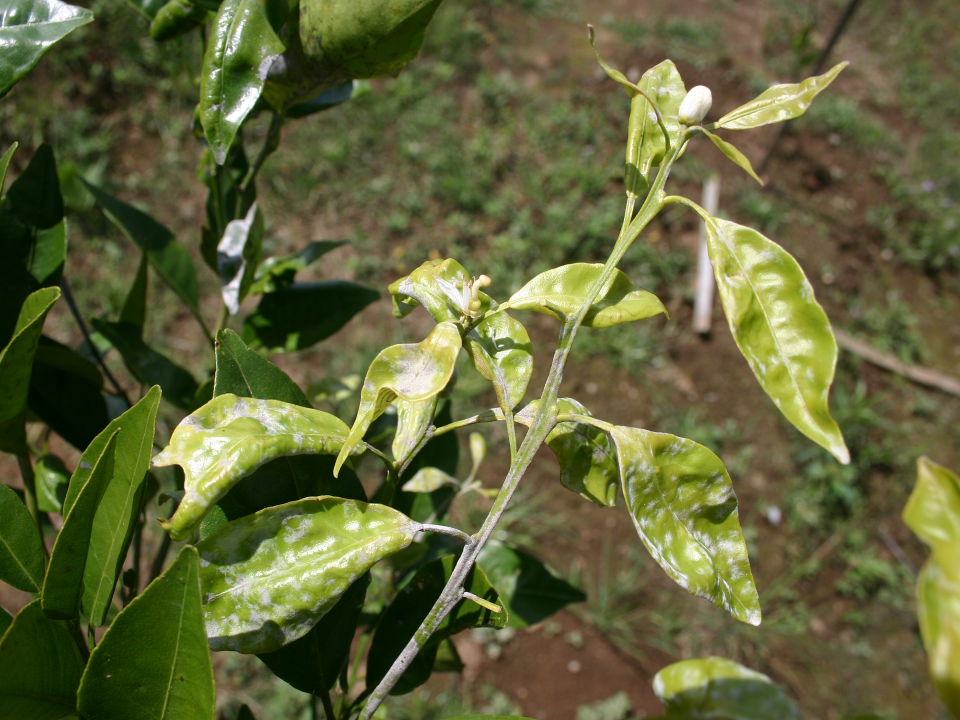
Oidium citri Crop: Citrus Why is it a problem? This fungus is mostly a problem in nurseries and young orchards where it prevents growth, although new growth in older orchards can also be affected. Severe infections kill branches. It can also attack young fruitlets causing distortion and premature fruit drop. …

Print Friendly, PDF & Email

Turcicum leaf blight (TLB)

Exserohilum turcicum Crop: Maize Why is it a problem? This was the most important disease of maize, causing significant yield losses. However, the release of tolerant varieties means that it is now relatively easily managed. Where and when is it a problem?  Turicum leaf blight is most prevalent between 1200 …

Print Friendly, PDF & Email