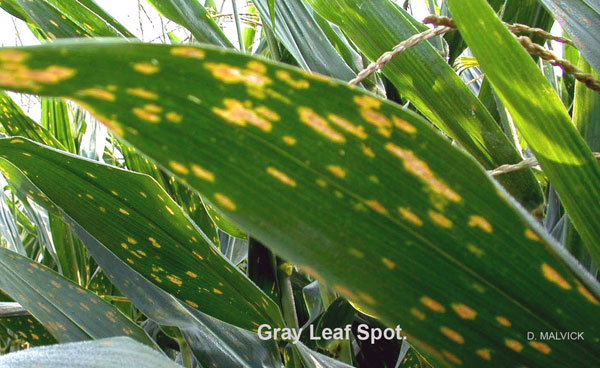
Gray leaf spot (GLS)

Cercospora zeae-maydis Crop: Maize Why is it a problem? First detected in Bhutan in 2006, this disease quickly became the most serious threat to maize production. A major research and development program successfully resulted in the release of GLS tolerant maize varieties. This disease can now be managed relatively easily. …

Print Friendly, PDF & Email

Clubroot

Plasmodiophora brassicae Crops: Cole crops Why is it a problem? Clubroot is a disease that deforms the roots of Cole crops preventing and distorting their development and making the plant susceptible to secondary infection. It is difficult to control, and spores can survive many years in the soil. High spore …

Print Friendly, PDF & Email

Harlequin bug

Eurydema spp. Crops: Cole crops, beans, spinach Why is it a problem? Harlequin bugs can be damaging during the seedling stage and early stage of the crops in Bhutan. The concentrated attack causes widespread withering of young leaves. However, it rarely causes economic losses. Where and when is it a …

Print Friendly, PDF & Email

Cabbage aphid

Brevicoryne brassicae Crops: Cole crops, also mustard and radish Why is it a problem? The wax, shed skins, mold, and honey dew associated with cabbage aphid colonies can spoil the appearance of Cole crops for market. This is primarily a problem for broccoli, where the heads can become unsaleable. Where …

Print Friendly, PDF & Email

Diamondback moth

Plutella xylostella Crop: Cole crops Why is it a problem? Diamondback moth (DBM) larvae feed on the foliage of Cole crops. Although larvae are small, outbreaks can destroy entire crops if not recognized and managed in time. Larvae can be evenly distributed across a field, so can cause significant losses …

Print Friendly, PDF & Email

Cabbage moth

Mamestra brassicae Crops: Cole crops Why is it a problem? Cabbage moth larvae are large and feed individually. They feed within cabbage heads, and even the presence of a few larvae within a head can completely spoil it for market. Once inside the cabbage, they can be difficult to find …

Print Friendly, PDF & Email

Cabbage white butterfly

Pieris brassicae Crops: Cole crops Why is it a problem? The cabbage white butterfly is probably the most important of several moth pests that feed on Cole crops in Bhutan. It is a conspicuous pest that can be managed through regular monitoring and physical control, although insecticides are often used. …

Print Friendly, PDF & Email

Angoumois grain moth

Sitotroga cerealella Crop: Stored grain, especially maize Why is it a problem? The grain moth is an important pest of whole cereal grains, especially maize. It destroys the inside of grains, resulting in weight loss. Where and when is it a problem? Grain moths are less widespread than grain weevils. …

Print Friendly, PDF & Email

Grain weevils

Sitophilus species Crop: Stored grain, especially maize Why is it a problem? Grain weevils are the most important storage pests in Bhutan,  particularly of maize. Where and when is it a problem? They can cause high losses below about 1,200 m asl, intermediate losses to 1,700 m asl and don’t …

Print Friendly, PDF & Email

Chilli blight

Phytophthora capsici Crop: Chilli Why is it a problem? Chilli blight is the most serious problem in chilli cultivation in Bhutan. It causes sudden wilting and death of plants, both in the nursery and in transplanted fields, thereby reducing yields. In severe cases, entire crops can be lost. Chili blight …

Print Friendly, PDF & Email