Early blight

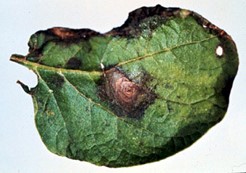
Alternaria solani Crop: Potato. It has also been reported on tomato   Why is it a problem? Early blight is a fungus that, looks like late blight, can defoliate and even destroy unprotected potato crops. However, treatment is not often required. Where and when is it a problem? Early blight co-occurs …

Print Friendly, PDF & Email

Potato viruses

Potato Leaf Roll Virus (PLRV) and Mosaic Viruses (PVX and PVY) Crop: Potato Why is it a problem? Several potato viruses have been reported in Bhutan. Serious PLRV infections can greatly reduce yields, but can normally be easily avoided through good management practices, especially seed potato renewal and hygiene practices. …

Print Friendly, PDF & Email

Late blight

Phytophthora infestans Crops:Potato and Tomato Why is it a problem? Late blight is the most important disease of potato in Bhutan. The pathogen is capable of destroying an entire unprotected potato crop within one to two weeks under the right weather conditions.  Losses can be largely avoided through intensive management, …

Print Friendly, PDF & Email

Premature leaf fall (PLF)

Alternaria mali or Gloeodes pomigena Crop: Apple   Why is it a problem? As the name suggests, premature leaf fall (PLF) disease of apple results in defoliation of parts or entire trees while apples are still developing. On rare occasions, it can also infect apples which become black by harvest …

Print Friendly, PDF & Email

Apple scab

Venturia inaequalis Crop: Apple   Why is it a problem? The major economic loss through apple scab is the substantial reduction in fruit quality of scabbed apples. Considerable management, including the use of fungicide, is needed to prevent loss of fruit quality (“improve apple colour”) in susceptible areas. More severe …

Print Friendly, PDF & Email

Fruit tree red spotted mite

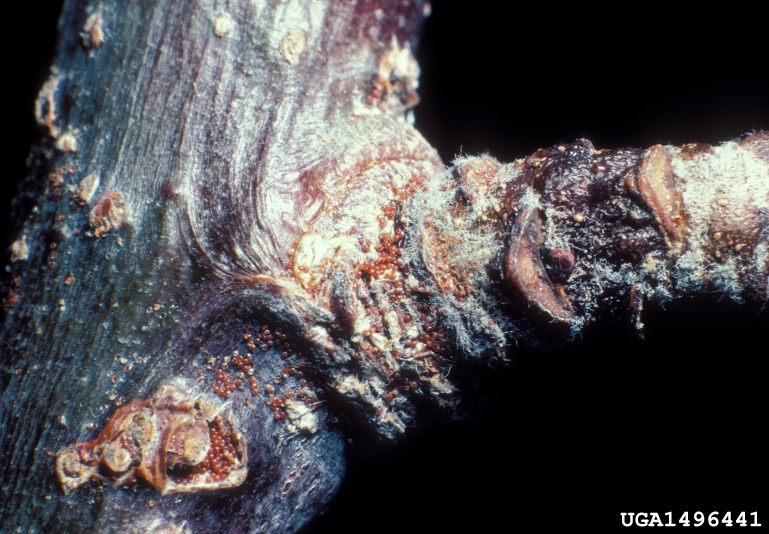
Panonychus ulmi Crop: Apple Why is it a problem? Prolonged, intense infestations weaken apple trees, seriously affecting the development of shoots, buds and fruit set in the following year. Where and when is it a problem? Mites can be a pest in most apple growing regions, but serious problems are …

Print Friendly, PDF & Email

Apple fruit beetles

Popillia species and Protaetia neglecta Crop: Apple Why is it a problem? The adults of six species of apple fruit beetles all feed on developing apples, making them unmarketable. Although feeding damage can be conspicuous, the economic impact is not important unless beetles arrive in large numbers. Where and when …

Print Friendly, PDF & Email

Green apple weevil

Myllocerus sp. nr chloris Crops: Apple, peach Why is it a problem? Adults feed in groups on small apples, causing rot and making them unmarketable. They can arrive in large numbers. However, as they normally feed in groups total fruit loss is generally quite low and they can be relatively …

Print Friendly, PDF & Email

Two-spotted apple beetle

Microserica sp. Crop: Apple Why is it a problem? Large beetle numbers can defoliate trees. This is mainly a problem with young trees and newly established orchards where it can retard growth. Where and when is it a problem? Problems have been recorded in Thimphu and Paro valley from late …

Print Friendly, PDF & Email

Apple twig borer

Linda rubescens Crop: Apple Why is it a problem? Larvae bore into stems, causing twig dieback. This is most damaging in seedlings, where the main leading shoot can be destroyed. Where and when is it a problem? Outbreaks are quite localized and rare. They have been reported in apple orchards …

Print Friendly, PDF & Email