

Tuta absoluta (Gelechiidae: Lepidoptera)
Common name: South American tomato pinworm
Host: Tomato, potato, eggplant, peppers, sweet pepper, tobacco, bean, green bean
Why is it a threat?
It is oligophagous, feeding mainly on Solanaceae species. It is highly specialized and prefers tomato over other crops, causing significant damage to all parts of the plant, including leaves, stems, flowers, and fruits. It is a major pest of tomato in the greenhouse and open-field tomato cultivation, causing crop losses of up to 100%
IDENTIFICATION
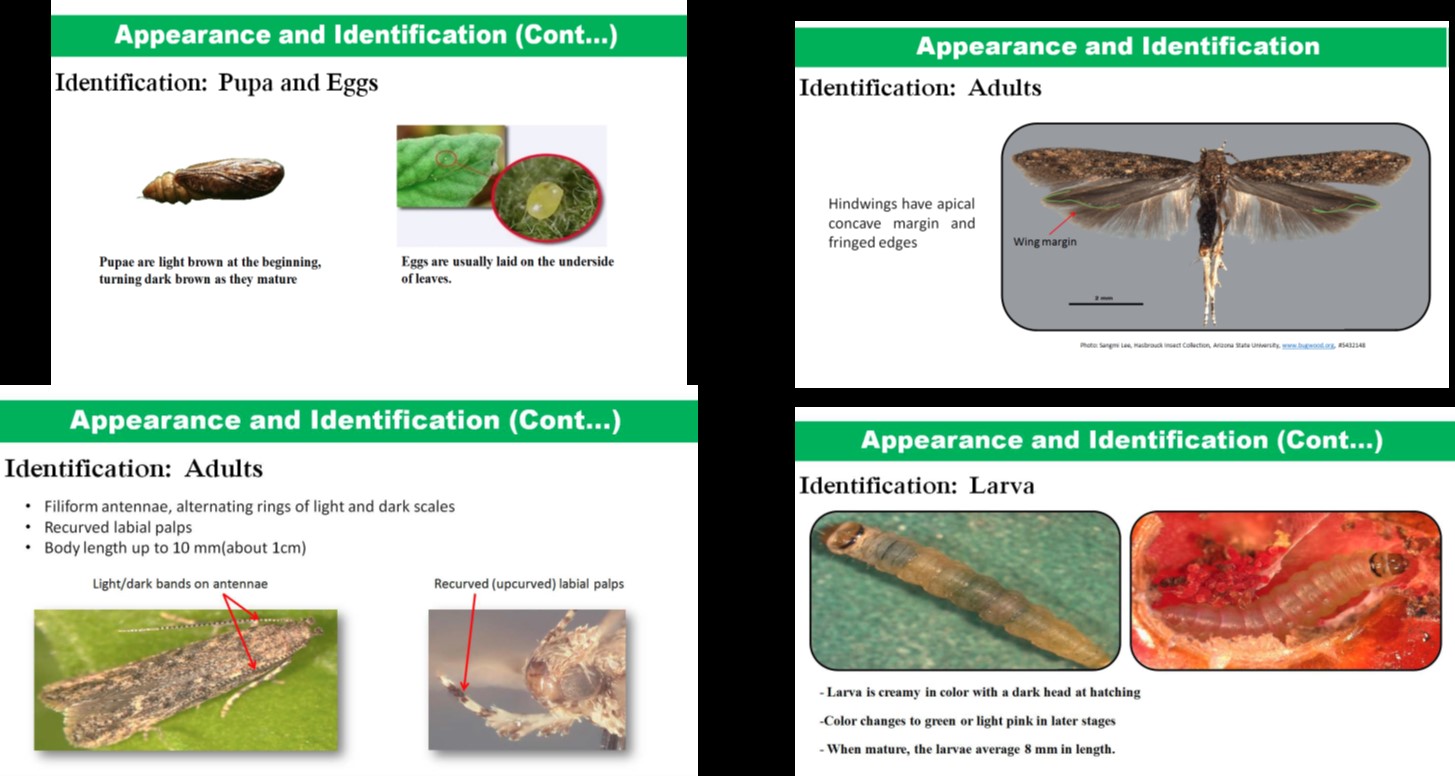
Adult moths are small (5-7 mm long and with a wingspan of 8–10 mm). grey-brown with filiform (bead-like) antennae and black spots on the forewing. Eggs are small (0.35 mm long), cylindrical, and creamy white to yellow. Larvae (L1) are whitish to yellowish and mine inside the tomato leaves. In the second to fourth instars, they turn greenish to light pink. Pupae are greenish initially, becoming dark brown with time.
DAMAGE SYMPTOMS

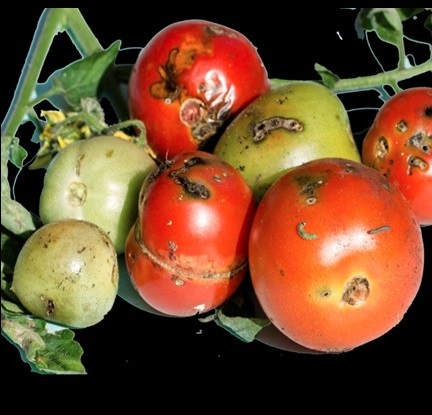
The most distinctive symptoms of damage are the blotch-shaped mines in the leaves. Damage is caused by all larval instars and throughout the whole plant, which feed on mesophyll tissue and from irregular leaf mines, which later become necrotic. They also attack fruits and make pin-sized holes in the fruit, and finally, fruit rot is observed. Larvae can feed on apical buds, leaves, stems, flowers, and fruits.
Confusion with other pests: The only insect pest currently reported to cause leaf-mining and boring damage to tomatoes and potatoes is the potato tuber moth (PTM).
BIOLOGY

Life cycle:
The tomato leaf miner can lay up to 260 eggs each and can complete up to 10–12 generations a year under favorable conditions. The lifecycle is completed within 30–35 days. Adults are nocturnal and hide between leaves during the day. There are four larval instars (stages). Pupation may take place in the soil, on the leaf surface, or within mines. The tomato leaf miner can overwinter as eggs, pupae, or adults, depending on environmental conditions. Larvae do not enter diapause when food is available.
Dispersal: The movement of infected tomatoes, tomato plants, and used containers is known to be a high-risk pathway. Outdoor markets that sell infested fruit would pose a great risk.
When can damage be expected? The tomato leaf miner can cause serious damage throughout the tomato growing season.
MANAGEMENT PRACTICES
- Scouting
Look for the presence of silvery tunnels on the leaves, which indicate larval feeding. Be alert for premature leaf drop, tiny holes on stems, and larvae or mines inside fruits. Check for exit holes on fruits surrounded by frass, and inspect for fruit rot caused by secondary infections.
- Monitoring
Adult male moths can be monitored using pheromone traps, which can give early warning of infestation. Pheromone traps are available at NPPC.
- Mechanical control
Tomatoes grown in the greenhouses should be fitted with insect exclusion nets. Human movement from infested to non-infested greenhouses should be avoided.
- Cultural control
- Remove and destroy sources of infestation such as crop residues (stem, leaves, fruits, etc), symptomatic leaves and fruit
- Destroy alternative hosts, e.g. volunteer potato, sweet pepper, Black nightshade, eggplant, or tobacco, in the vicinity of the tomato field/screen house
- Destroy crop residue after the harvest of tomatoes, potatoes, eggplants, or peppers as soon as possible
- Clean all equipment used in the transportation of tomatoes, such as boxes, crates, and trucks, by using soap and water
- Chemical control
Chemicals should be a last resort, as synthetic pesticides are generally ineffective. The larvae remain concealed within leaves, fruits, and stems, limiting pesticide contact
Check out these links for more information:
https://apps.lucidcentral.org/ppp/text/web_full/entities/tomato_leafminer_421.htm
https://www.youtube.com/watch?v=4MMu0c_m7UY
http://• https://technologytransfer.icipe.org/wp-content/uploads/2021/06/Tuta-absoluta-Manual2020-Jan2021-1.pdf
http://• https://www.koppert.com/plant-pests/caterpillars/tomato-leafminer/
Version: NPPC 2024. Tomato Leaf Miner (Pest Alert) V3.0. Bhutan Pest Factsheet. www.PestsofBhutan.nppc.gov.bt. Date updated: 10 December 2024. Contact: nppcsemtokha@gmail.com
Image acknowledgments: http://www.tutaabsoluta.com/tuta-absoluta; An overview on Tuta absoluta, identification, origin, distribution, damage, and economic impact. Prepared by Mr. Lalit P. Sah/ Agay P. Giri.
