

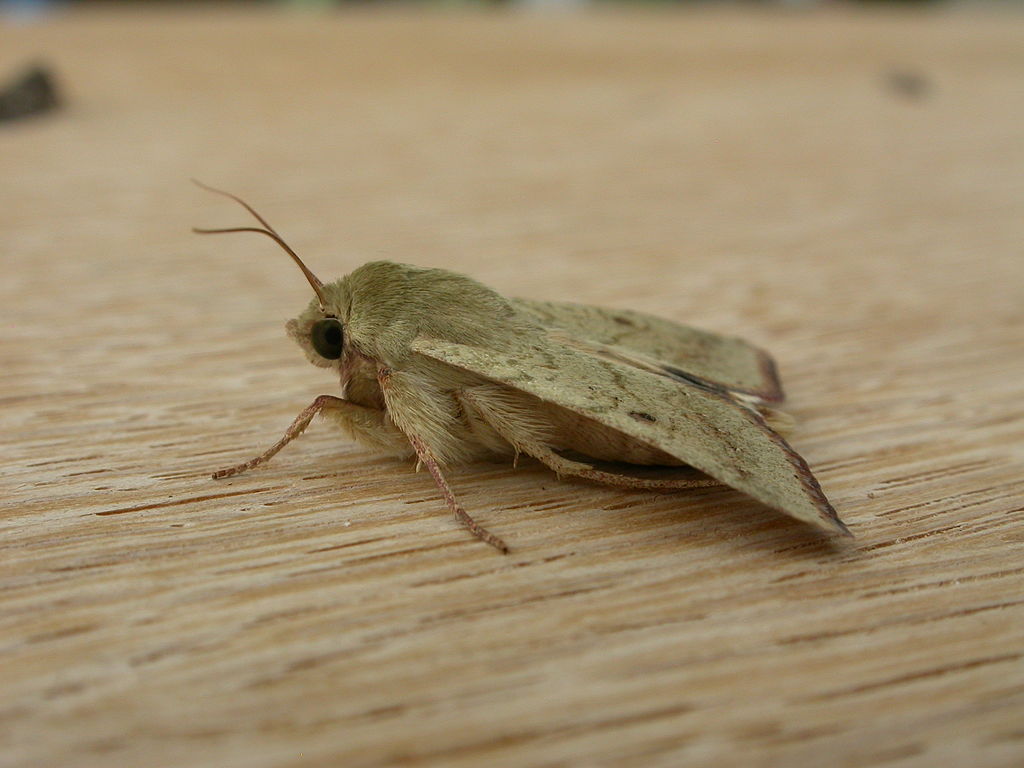
Helicoverpa armigera
Crop: chili, tomato, chickpeas, and maize
Why is it a problem?
Caterpillars can attack a wide range of crops. In Bhutan, they cause the greatest damage to chili and tomato. Chilli damage is internal, mostly to the seed, so the main effects are aesthetic and the loss of hot seeds. Larva feeding can predispose fruits to fungal and bacterial infection, causing fruit drop. Newly introduced chickpeas were heavily attacked in eastern Bhutan when being trialed during the early 1990s.
Where and when is it a problem?
Chilli pod-borer probably causes losses in all chili-growing regions, but reports of serious losses have been received from Punakha, Wangdi, and Tashi Yangtse. The greatest damage to chili is typically early in the year (spring) and is generally localized. Losses of around 10% are common, but almost total crop loss can occur within a farm.
Outbreaks of chili pod borer on national news channel
- https://www.bbs.bt/news/?p=132358
- https://kuenselonline.com/punakha-farmers-fear-poor-chili-harvest/
IDENTIFICATION
Caterpillars can reach 4 cm and vary in color. The first two larval stages are yellowish-white to red-brown. Later stages are usually greenish, but sometimes brown to black.


Adults are stoutly built, large (wingspan up to 4 cm), brown or yellowish-brown moths. They have a conspicuous black spot in the center of their forewings. Eggs are small (0.5 mm in diameter) and yellowish with longitudinal ridges. They are laid in small batches of single eggs on the leaves of flowering plants.

SYMPTOMS
Caterpillars go straight into the pod. Feeding concentrates on the developing seed and seed-bearing parts, leaving the pericarp (flesh) untouched. In chillis, larvae are totally inside the fruit, leaving no visible entry points. In tomatoes and pulses, the front half of the body is characteristically in the fruit, with the rear sticking out. It causes premature dropping of pods and flowers, and pods usually turn white.


Confusion with other pests: Chilli pod-borer is the only large caterpillar in chilies.
BIOLOGY
Lifecycle: In temperate regions of Bhutan, egg-laying starts in March. The presence of adults near lights at night and in pheromone traps is a clear indication that it has started. Females can lay more than 1,000 eggs. Larvae hatch after three days and initially feed on leaves and flowers. While growing older, the caterpillars prefer to bore into fruiting bodies. Larval development takes 2–3 weeks. Pupation normally takes place in the soil and the pupal stage takes two weeks. In temperate Bhutan, 2-3 generations occur, but more are likely in the south. It overwinters as pupae. Moths live for three weeks.
Dispersal: Adults are excellent fliers.
When can damage be expected? In chillis, damage is greatest in early planted (spring) crops. Serious outbreaks are unpredictable and can occur on one farm but not neighboring ones, as observed in Punakha Valley in May 2016.
Hosts: Larvae can feed on a wide range of hosts. In Bhutan, it can be troublesome in chili, tomatoes, chickpeas, maize, and other pulses.
MANAGEMENT PRACTICES
The chili pod borer is difficult to manage as outbreaks are unpredictable, and the immature stages within chilies are difficult to detect in time.
Monitoring
- Farmers and researchers can monitor the presence and abundance of male moths
- The presence of the moths near light is a clear indication of potential egg-laying activities.
- The Economic Threshold Level (ETL) for Helicoverpa armigera is 8–10 moths caught per day, indicating a pertinent outbreak. Hence, continuous crop monitoring and preparedness must be maintained for possible intervention.


Effect of variety
Not known.
Non-chemical management
- Deep plowing of the field before (1 week) transplanting of chili to expose the pupae in the soil.
- Flooding the field before transplanting will kill the pupae
- Collecting and destroying the infested chili pods
- All the dropped chili pods and inflorescence should be picked and destroyed
- Mass trapping using pheromone traps was found effective in reducing moth populations in Punakha. Install 2 pheromone traps per langdo or 4-5 pheromone traps per acre as soon as flowering starts to monitor and mass-trap the adults. Contact the NPPC for advice on procuring pheromone traps.
Chemical management
- Accurate timing of insecticide sprays is important to target the vulnerable stage of the pod borer. It is effective when the larvae are small. However, young larvae are difficult to find.
- Older larvae bore inside the pods, making them less susceptible to contact insecticides. This diminished accessibility necessitates higher doses for effective control, leading to direct economic losses.
- Provided applications are properly timed, the recommended chemical is Chlorantraniliprole 18.5 % SC: 3ml/10 liters of water
Note: Insecticide spray is always recommended as the last option, and a waiting period of at least 2 weeks shall be maintained. The waiting period, also known as the pre-harvest interval (PHI) or re-entry interval, is the specific duration that must elapse between the application of a pesticide and the harvesting of the crops. It is the time required for the pesticide to break down or dissipate to levels deemed safe for human consumption
The use of chemicals has drawbacks:
-
- chili pod-borer can rapidly develop resistance;
- indiscriminate spraying wipes out the natural pest control system; and
- chili pod-borer attacks the flowering stage, so for crops depending on cross-pollination (like pulses), insecticides interfere with the fruit set.
Version: NPPC 2017. Chilli pod-borer V1.0. Bhutan Pest Factsheet. www.PestsofBhutan.nppc.gov.bt. Date produced: 14 April 2017. Last date revised: 26 Feb 2024. Contact; nppcsemtokha@gmail.com
Image acknowledgments: NPPC & Wikiwand.com/Helicoverpa armigera
