


Phthorimaea operculella
Crop: Potato
Why is it a problem? PTM is the most common insect pest of potato in Bhutan, destroying the crop both in the field and during storage. Foliar and tuber damage can result in substantial yield losses. As a storage pest, it can destroy high proportions of tubers kept as seed potato and for private consumption (21-42% in one survey).
Where and when is it a problem? PTM causes the most damage in the main potato growing areas up to about 2,500m asl. If left unmanaged, substantial losses can occur each year in places where it is well established. It has not been reported as a field pest at low altitudes, and potato are typically not stored for long periods there. However, it has the potential to be a very serious pest there as well.
IDENTIFICATION


When first laid, oval eggs are pearly white, changing to yellow on maturity and to black just before hatching. All larval stages have a dark brown head. Young larvae are grey or yellow-white. Mature larvae are up to 12 mm long and are tinged with pink or green. Pupae are formed in a flimsy silken cocoon covered with soil particles and debris for camouflage.
Adult moths have a narrow silver-grey body and greyish-brown fringed wings with small, dark specks. They are 10 mm long with a 12 mm wingspan.
SYMPTOMS
The larva attacks all vegetative plant parts of the potato. The peculiar leaf damage symptoms are mines caused by larvae feeding in the mesophyll and boring of stems, which causes plants to wilt (Figures 1 and 2). Detection in tubers normally requires cutting them open to reveal larvae within galleries of slender, dirty-looking tunnels. Sometimes their presence is obvious due to mounds of frass (droppings) at the tunnel entrance. Infested tubers often also become infected by fungi or bacteria (Figure 3)
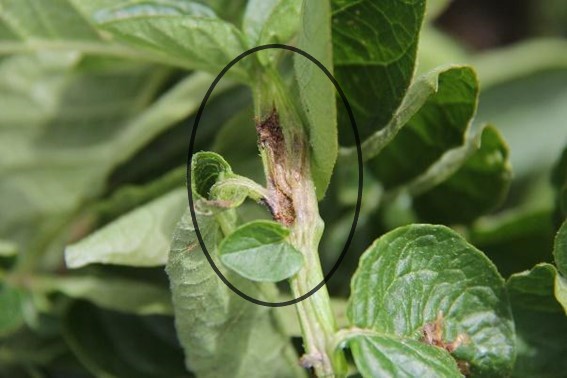

Figure 2: Foliar damage (mines) (Observed at Chapcha, Chukha )

Figure 3: Tubers infested by PTM showing rot symptoms (observed at Chapcha, Chukha)
Confusion with other pests: PTM is the only moth pest that commonly infests potato tubers in Bhutan. It sometimes attacks tomatoes and chilli, in which case it could be confused with other pod-borer species, especially the much more common and larger chilli pod-borer.
BIOLOGY
Lifecycle: Adult females lay up to 200 eggs, singly or in small batches, on the underside of potato leaves, near eye buds on exposed tubers, or on the soil. In the field and also on sprouts of stored potatoes, newly hatched larvae bore into leaves, where they make leaf mines. They gradually bore into the stems and eventually, the tubers, in which they make irregular galleries. In exposed potato tubers, larvae usually enter through the “tuber eyes” from eggs laid nearby. Larvae pupate in dirt-covered cocoons inside the leaf fold, in soil, leaf litter, inside the tuber, or in the cracks and crevices of potato stores.
Under warm to hot conditions, PTM can complete multiple generations annually, with each cycle (egg to adult) taking as little as four weeks. However, PTM cannot be established at higher altitudes above 2500 m.a.s.l. due to low temperatures that hinder its development
Dispersal: Adult moths can fly easily between fields and into potato stores. Larvae can also be easily spread into clean areas through the movement of infested potatoes. The use of infested seed potatoes is an important way of infesting fields at the start of the planting season.
When can damage be expected? In areas where PTM is well established, high levels of damage can be sustained every year in the absence of management. Warm potato tuber storage conditions will result in more generations being completed and, therefore, more damage. In the field, tuber damage is most severe in heavy soils, which crack readily if they dry out late in the growing season.
Hosts: It is a pest of potato, but it can also develop on tomato, brinjal (eggplant), and chili.
MANAGEMENT PRACTICES
Integrated management is essential in areas where PTM is known to cause significant losses to stored potatoes or in-field damage. Management practices will need to be carried out throughout the year, from storage to planting to harvest. Implementing strict hygiene practices and regular monitoring is critical.
Monitoring
- Use sex pheromone traps (5 traps per acre) to attract and monitor adult male moths. It helps in early detection and population estimation.
- Moth presence in the field can be detected by gently shaking the plants by hand or with a stick
- Regularly inspect plants for symptoms like leaf mines, stem damage, or frass near tubers.
- Check stored potatoes frequently for signs of larval entry, webbing, or frass. If damage is seen, then cut tubers open to confirm identification.
Effect of variety
The use of resistant varieties can reduce infestation levels. Desiree is said to be moderately resistant.
Non-chemical management
Planting
- Select PTM-free seed tubers, free from tunnels or frass.
- Remove and destroy any infested seed before planting
- Keep seed potatoes in clean, ventilated, and PTM-free areas.
- Remove crop residues, cull piles, and volunteer plants after harvest.
- Earth up soil around the base of potato plants to prevent tuber exposure.
- Store potatoes in well-ventilated, dark, and cool conditions, and cover tubers with layers of leaves of plants such as Acorus calamus and Artemisia spp. to prevent moth access.
Harvesting
- Do not leave potato tubers in the field overnight to be picked and stored the following day, because the female PTM is most active at night. Therefore, harvest and store on the same day.
- Select healthy tubers with no signs of PTM damage for storage at the time of harvest. Discard the infested ones.
Management under storage
Careful storage of seed potato is critical to ensure clean seed is available for planting.
- Clean storage areas and containers thoroughly before use to eliminate any eggs, larvae, or pupae from previous infestations.
- Avoid mixing old and new potatoes in the same storage space. Always remove and destroy infested tubers to prevent the spread of PTM.
- Ensure proper ventilation in stores to keep the environment cool and dry, which slows down PTM development.
- Covering stored potato with repellent plants such as sweet flag (Acorus calamus) (https://www.sciencedirect.com/science/article/pii/S2666154322001442) and Artemesia sp. (http://www.istrc.org/images/Documents/Symposiums/Fifthteenth/s7_maharjan_fly.pdf ) may reduce the incidence of PTM, although their effects have not been properly tested yet in Bhutan.
- Never use potato plant foliage to cover harvested tubers.
Chemical management
- Apply insecticides when monitoring (pheromone traps) indicates rising moth activity or when damage symptoms are first observed in the field.
- Focus sprays during the vegetative to tuber bulking stage, especially when moths are most active.
- Use recommended insecticides such as Chlorantraniliprole 12.5 SC% (3 ml per 10 liters of water) or Emamectin benzoate 5% SG (2 g per 10 liters of water).
- Please ensure you wear the appropriate personal protective equipment (PPE) while spraying. This includes gloves, masks, goggles, and protective clothing to safeguard yourself from exposure to chemicals.
For more information, click on the following links:
- Field Evaluation of Attracticides in Managing Potato Tuber Moth, Phthorimaea operculella Zeller (Lepidoptera: Gelechidae) in Bhutan https://bjnrd.org/index.php/bjnrd/article/view/17/14
- Extension leaflet: https://www.nppc.gov.bt/download/potato-tuber-moth/
- Integrated Pest Management of Potato Tuber Moth in Bhutan – Training Manual (Hard copy available at NPPC)
Version: NPPC 2025: Potato Tuber Moth V3.0. Bhutan Fact Sheet. http://pestsofbhutan.nppc.gov.bt. Date produced: 12 December 2022. Date revised: 15 April 2025. Contact: nppcsemtokha@gmail.com
Image acknowledgment: NPPC & MyPestGuides crop
